By: Mandy
Posted: July 11th, 2026
Click the thumbnails in this article to view them at full size!
In high school, I became close friends with a horror movie enthusiast. We would spend our lunch breaks deconstructing every Friday the 13th and A Nightmare on Elm Street movie, and thanks to those conversations – as well as I-Mockery’s regular horror movie articles and James Rolfe’s yearly Monster Madness reviews – I was inspired to watch as many horror movies as possible. For what many would consider a low-brow genre, it tickled my mind in ways other movies didn’t. Filmmakers and screenwriters used the genre to put a face on their anxieties and trauma, and as someone with severe anxiety I found catharsis in seeing how they reckoned with them – or didn’t.
The first college class I fell in love with was a film studies class. It taught me what it meant to be media literate and it introduced me to some of my favorite movies of all time. At that moment, I knew I would never shut up about movies – whether that meant exploring the feelings movies give me, analyzing the subtext behind the movies I love, or learning about the history and behind-the-scenes stories behind them. I love it all. So, if you’re wondering why my film and biography podcast I do with my wife and my Letterboxd account where I review a minimum of two movies a week just isn’t enough, I have to shrug and say “that’s hyper-fixations for you!”
Hello, my name is Mandy. I’m the middle initial in EMN, and my goal is to make this a regular film column, sometimes about recommendations, but mostly to talk about trends and things that inspire me. Until the day Letterboxd allows me to post full essays, welcome to a vacation home for my thoughts. So, without further ado…
Four years ago, the DiscussingFilm Twitter account revealed screenshots for a then-unreleased horror movie called Winnie-the-Pooh: Blood and Honey. The movie appeared seemingly out of thin air mere months after the willy-nilly-silly old bear entered the public domain. As of 2026, the tweet has nearly 9,000 quote retweets and at least 1,500 comments, nearly all of them sharing identical sentiments of disgust and confusion. Even I responded back then with a confused GIF, saying that I didn’t think it would be good, but I would love to be wrong. After that, I didn’t think twice of it until its release half a year later. The slasher take on A. A. Milne’s Winnie-the-Pooh (differentiated from the Disney character with the book-accurate hyphens to keep the House of Mouse’s lawyers at bay) sees a college-aged Christopher Robin haunted by a grotesque Pooh and Piglet, who look like people in costumes, but really are a bear and a pig. The story goes that after regularly coming to feed and take care of the Hundred Acre Wood, Robin eventually grew out of it, and as such the creatures of the Hundred Acre Wood became starved and cold, souring themselves on humanity, the predators of the group reverting back to their animal instincts. It’s dedicated to interpreting everything that happened in the Hundred Acre Woods as a literal group of talking animals rather than Christopher Robin’s active imagination, with Christopher Robin as a modern British man as opposed to a representative of A. A. Milne’s son.

It really didn’t feel real.
Many made the decision to seek out the movie out of morbid curiosity, but the movie received almost universally terrible reviews – even from hardcore fans of horror movies. Still, even bad word-of-mouth wasn’t enough to stop it from being a huge success on streaming services. One only needs to look at how heavily Peacock marketed Blood and Honey II to see how much of a hit the initial premise was with audiences, and given the film was made for a meager $50,000, it wound up making back fifteen times its budget, giving director Rhys Frake-Waterfield more than enough money to justify a sequel. On a personal note, I’ve heard way more water cooler talk, Discord chats, and family dinner discussions on the killer Pooh bear than even movies like Barbarian and the X trilogy, which says so much about how the initial shock value of seeing a murderous childhood icon ‘worked’. One could call Frake-Waterfield an innovator, but like how John Carpenter didn’t technically make the slasher genre with Halloween, his contribution was more about knowing what to apply the idea to. If there was a starting point to pop culture’s obsession, it most likely begins with another killer bear.

Faz, not Mono.
Twelve years ago, the indie game Five Night’s At Freddy’s, made almost entirely by developer Scott Cawthon, released, and it became an immediate media juggernaut. The game sees you stuck at a desk needing to keep yourself safe from four animatronics looking to come through the doors and kill you. You have cameras you can check at any time to see if any of the animatronics have moved from their normal area, and you can shut the two doors with an automatic lock if you think they’ll be near, but you only have a limited amount of power per night. Every time you check the cameras or keep a door locked, it drains your battery, and you won’t want to be left alone with the animatronics when the lights are out. On top of a simple gameplay loop that builds up tension, there is dedicated lore and a story based in childhood nostalgia, ingredients that really helped this succeed. In the same way Winnie-the-Pooh: Blood and Honey took cues from the original Pooh books and their Disney adaptations, Freddy’s Pizzeria is reminiscent of restaurants common in the eighties and nineties with animatronic bands, most notably Chuck E. Cheese and ShowBiz Pizza. YouTubers and streamers helped to make it a success by playing through it and recording their reactions, with some digging deeper into the breadcrumbs of lore to see if they could uncover more than what was beneath the surface.
To call Five Nights At Freddy’s a success is putting it mildly. As it stands there are eleven games in the series, eight spin-offs, and countless other games very obviously inspired by the franchise’s success, such as Bendy and the Ink Machine or Poppy’s Playhouse. If you enter your local mall or superstore chain, you are almost guaranteed to find a kiosk or a store selling shirts, dolls, or figures of these franchises, all of them skewed at a younger demographic than other horror properties. Indeed, the idea of a modern horror franchise being this marketable is something uniquely modern. Horror has mostly been aimed at a teen demographic, with certain franchises such as Goosebumps popular with preteens, but the streaming community (and their predecessors, the YouTube ‘Let’s Play’ community) managed to introduce fans not even in the double digit age bracket to horror. So, naturally where there was money to be made, Hollywood wanted in on the action.
Only one year after FNaF dropped, Warner Bros. purchased the rights to adapt the film to screen, with Freddy’s creator Scott Cawthon acting as producer and writer on the script. The development was heavily delayed, with multiple rewrites, as well as different directors and studios jumping around the project, but eventually the final film arrived in time for Halloween 2023. On a budget of 20 million dollars, the Freddy’s movie made over 297 million at the box office, immediately being a huge financial success for both Blumhouse Studios and Universal. A sequel was immediately greenlit and released two years later.
Of course, the eight years of development is a long time, and with copyright laws allowing for mockbuster companies like The Asylum to pump out legally distinct movies with titles like Snakes on a Train, Atlantic Rim and Top Gunner: Danger Zone right before their more popular Hollywood counterparts were set to come out on video, there was room for copycats of Five Night’s at Freddy’s to give their takes on the idea. The most notable copycat – one arguably better than the actual Freddy’s movie – was 2021’s Willy’s Wonderland, a movie featuring Nic Cage as a nameless, ass-kicking janitor who protects a group of teens set to be sacrificed to killer animatronics at a haunted entertainment venue & pizzeria.

“It’s better! Much better!”
Some others were a little more unique with their approach, however, which is how we got 2019’s The Banana Splits Movie.
If you grew up in the sixties, or if you were a kid who woke up early in the nineties and the early aughts just in time to catch it on Cartoon Network, The Banana Splits was a comedy variety program featuring a band of anthropomorphic animals, played by humans in suits, getting up to mischief. The creators of The Banana Splits Movie were quick to say that it was inspired by films like Child’s Play instead, but it’s hard to deny the similarities to Freddy’s. They were already animals who played in a band, but the movie made a deliberate choice to say that the Splits were specifically animatronic robots, instead of actors in suits. Combine this with how out of character this was for the IP, and how strange it was they bought the rights to an abandoned 60’s kid show that vaguely resembled the Freddy’s cast, and you can understand my skepticism. As a promotional tactic however, it succeeded at turning heads and making for water cooler talk.
Good movie or not, the concept was outlandish enough to be an interesting gimmick, like a mystery box that someone promises you contains something too ridiculous to be true. It made sense at a time, too, that the circles on the internet that were talking about secret Pokémon you could unlock as a kid, and who were posting and reposting fake ghost stories about a lost, depressing episode of SpongeBob about Squidward’s death, would spread a movie like this to their friends, with the set up of “you won’t believe what they actually made”. It was a new gimmick to play around with, but not one Hollywood knew immediately how to follow up. A much less successful attempt at this ‘loose horror reinterpretation’ of an IP came one year later, when Blumhouse Studios released 2020’s Fantasy Island, based on the 70’s TV Show of the same name.
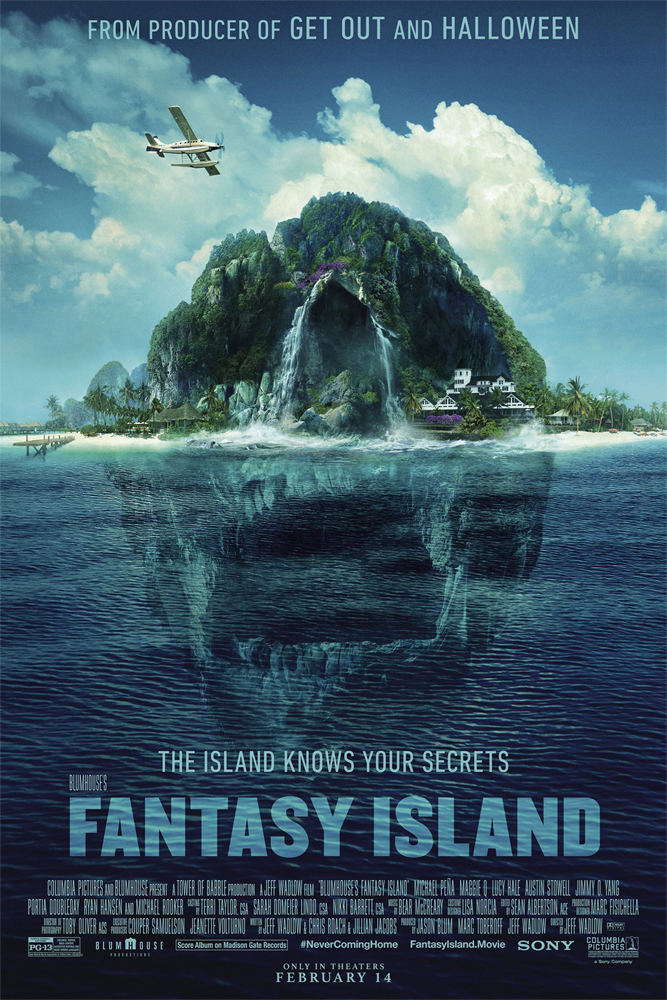
You probably forgot about this one.
Which leads us back to that Winnie-the-Pooh: Blood & Honey announcement only two years later. The rights to the character finally entered the public domain, and the internet took note of this well in advance. Not only was a beloved character now free to use in other stories, Pooh is a beloved character with popularity spread at least in part due to the efforts of the Walt Disney Company. The last major extensions to copyright laws in the US were thanks in part to Disney and their heavy lobbying to extend copyright terms for twenty years across the board, with their successful campaign effectively making a twenty year period where nothing would enter the public domain.
Their reason?
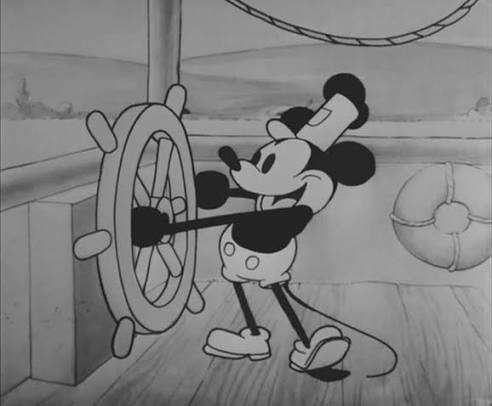
This guy!
When they started lobbying, Steamboat Willy was set to enter public domain in 2003, and they feared losing full ownership over the mouse who built the company. Hence, the act is derogatorily referred to as ‘The Mickey Mouse Act’. On top of the irony of the Walt Disney corporation regularly pumping out films based on stories that were only adaptable because they entered the public domain, people were rightfully mad, as things like film could rot and become unusable before ever getting a chance to enter the public domain, effectively creating lost media and sending characters or movies to the grave before getting the chance to be shared and spread.
So, whether people were trying to be counterculture as a “fuck you” to Disney, or just trying to make themselves laugh, Disney and their IPs became the punching bag of the internet. All of these things coagulated and combined, and that is how we got Blood & Honey. It’s a fun idea in the moment, but the joke got old fast for those watching it, and it’s more than likely this fad won’t last long. Following in Blood & Honey’s footsteps have been a string of imitators for other beloved characters, including The Grinch (The Mean One), Mickey Mouse (Screamboat), and Popeye (Popeye the Slayer Man). All of them have been much less successful, and that’s because the original Blood & Honey benefited from shock value that becomes less potent every time one of these are released. Drawing creepy eyes and blood on the mouth of a Simpsons character might shock you when you’re ten, but if you look at the same picture every day, it’s certainly going to feel passé at twenty.
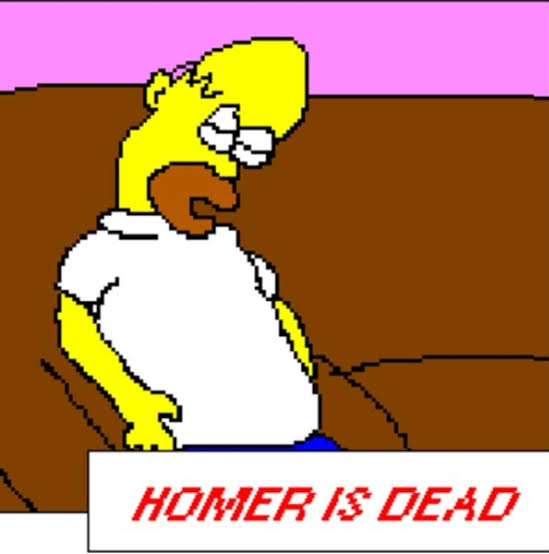
Boo!
Even the creator of Blood & Honey isn’t free from poisoning his own well. Rhys has been regularly producing and directing several other movies based on Disney properties, all under the label of the “Twisted Childhood Universe”, also known by the much funnier nickname of the “Poohniverse”. As it stands, they’ve released two Winnie the Pooh movies, as well as ones based on Bambi, Peter Pan, with a Pinocchio movie on the way. The ultimate end goal is an Avengers parody titled Poohniverse: Monsters Assemble. It’s a funny idea, and despite terrible critical reception, he managed to carve out a small group of fans, but the Avengers parody feels like the ultimate endpoint for this joke. Ideally from there, Frake-Waterfield will take whatever money he gets from it to make other dream projects, but allegedly he’s gone on record to suggest, free of sarcasm, that he plans to make horror versions of Teletubbies, The Powerpuff Girls, and the Teenage Mutant Ninja Turtles. So, the idea of him pursuing other projects seems unlikely.
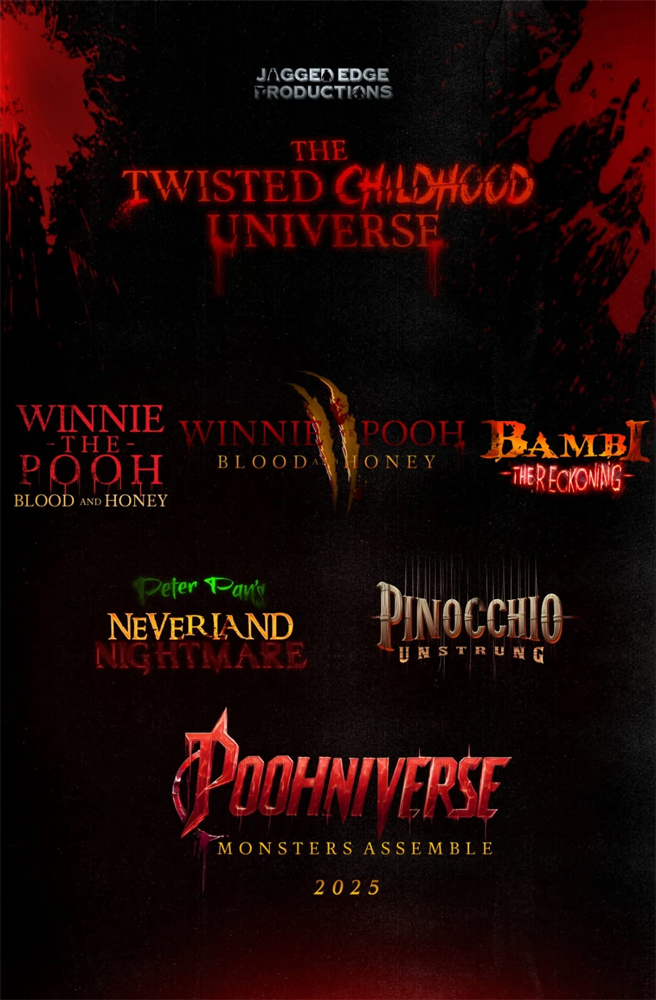
All the stars are here!
That said, there’s no real reason to fret what this subgenre’s failure or success means for the horror space. You’ll mostly find these movies mostly buried on free streaming services like Tubi, and they are far from permeating horror, which has seen a boom period over the last decade. It’s simply an ultimately inoffensive trend in a genre that has seen no shortage of originality in its releases across the last decade. Every film service is a potential platform these days, and so we’ve gotten a lot of gambits ranging from shock hits released on streaming to big budget success stories in theaters. Horror has historically been one of the cheaper genres to produce films for, and with film budgets inflating every year, it’s been one of the most trustworthy genres for theaters since the eighties.
The streamer Markiplier, one of the names who helped bring Five Nights at Freddy’s to the mainstream, recently released an adaptation of an indie horror game called Iron Lung to critical and financial success. The Terrifier franchise by Damien Leone has grossed over one hundred million dollars collectively, with the most expensive film in the series being made on a 3 million dollar budget. The video streaming service Shudder has distributed multiple hits on streaming, including Late Night with the Devil, Tigers Are Not Afraid, and One Cut of the Dead. Arguably most impressive of all, horror has finally started being recognized by the Academy Awards after years of feeling like a critical taboo, with last year’s big box office hits Sinners and Weapons both walking away with awards. Sinners was even nominated for more awards than any other movie that Oscars season. While some would say Jaws, Silence of the Lambs, and The Shape of Water aren’t “true” horror movies, which is a sentiment which I would strongly disagree with, the first genre for Sinners is unquestionably horror. Arguably, no genre has thrived more once the thrill of the superhero movies started to wane.
As for the Poohniverse and the other nostalgic corruptions, we’ll see if the last stop really is Monsters Assemble, or if there’s enough money to justify pumping them out Dick Tracy and Conan movies in the upcoming years. A medium only continues to thrive with innovation, however, and much like how moviegoers couldn’t stand another killer in a camp after Friday the 13th and Sleepaway Camp, once these childhood corruptions have successfully numbed audiences, it seems all too clear where this genre is going.
I can only hope the ambitious filmmakers use this as a jumping off point, and not get stuck in Poohgatory.
If you enjoyed this, click here for more of Mandy’s Movie Musings!